3.1 Processes for Meeting
Agencies typically utilize administrative procedures to conduct activities in an efficient, organized, and legally-sound manner. While there are many types of actions or activities associated with administrative procedures, those connected to the process of governing often have a high impact on inter-agency planning. Different agencies, however, may have different administrative practices to address governing processes. These practices may be set by the agency themselves, or by local, state, or federal law. In the following we will describe common sets of administrative practices related to governing and discuss the impact of these different practices on inter-agency coordination.
3.1.1 Holding Meetings
Administrative rules commonly dictate specific practices for announcing and holding meetings. These rules may detail procedures for actions like creating and following a meeting agenda, providing formal notice to the public, or meeting a quorum. In the following we will discuss these three common examples and explore how they can impact interagency coordination efforts. For many government agencies, specific procedures exist to agendize or formally add – topics to the planned discussion for a meeting.37 For agencies which operate under open meeting laws, decision-makers may be forbidden from discussing an item unless it formally appears on the agenda. Under these rules, if a non-agendized item is brought up – say by a member of the public during a public comment period – that item will need to be placed on the agenda for a future meeting before it can be deliberated and acted upon by decision-makers. This administrative procedure helps keep meetings organized and increases transparency with the public about the topics being discussed at each meeting, but it strictly limits the speed at which new topics can be introduced and deliberated. In contrast, other agencies may not have such constraints about introducing new topics during meetings and may therefore have the flexibility to deliberate and make ad-hoc decisions. These different levels of flexibility regarding which topics can and cannot be discussed during specific meetings can lead to vastly different timelines for making decisions between coordinating agencies.
As part of agenda procedures, some agencies operate under rules or laws which require the public to receive formal notice of their meetings (see Box 3a). For some governments, such as the state of California, these laws require the agenda to be made available for public review at least 72 hours before the meeting.37 This is also a common procedure for local government organizations, although the specific amount of time required for prior notification varies. In addition to specifying timeframes, prior notice rules generally dictate where the agenda must be published. These locations might include the local newspaper, the agency’s official website, or a community center bulletin board. Some groups may have an additional requirement to mail a formal notice directly to individuals who will be affected by an item on the agenda.36
Box 3a.Timelines for Public Notice and Agendas – General Example
Each agency has its own rules about the amount of advanced notice necessary and the process for entering an item on the agenda. The below timeline is an example for proposing, notifying, and deliberating an agenda item within an agency that meets once a month
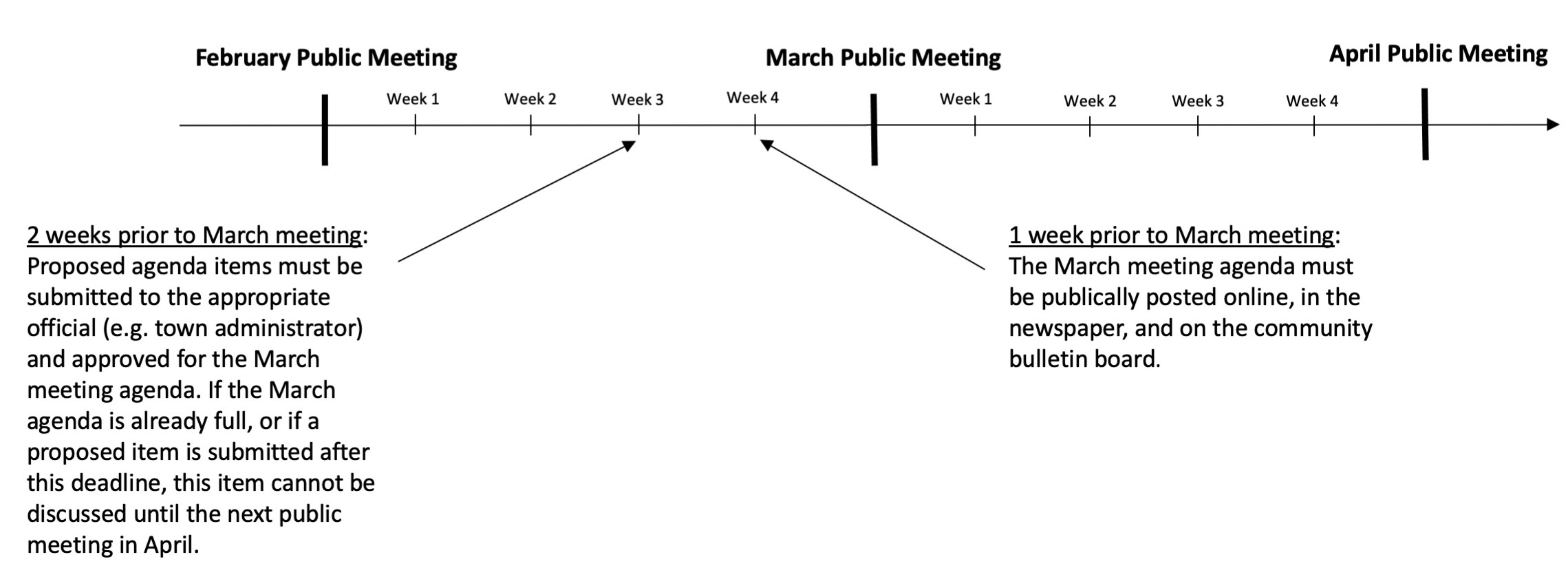
Formal notice and agenda rules help increase transparency with the public but greatly restrict flexibility for deliberation and decision-making. Failure to recognize these different constraints can impede planning efforts between coordinating agencies and may cause tension between partners, especially if perceived delays are inaccurately attributed to incompetency or an unwillingness to coordinate. The different deliberation and decision-making timelines between agencies can also affect the scope of coordinated projects, as some partners may be unable to make rapid decisions or deviate from certain plans.
A final common administrative rule that can affect inter-agency coordination is that of the quorum, or the number of decision-making members of an organization that must be present to conduct business.36 The number of members which constitute a quorum can differ by agency, but typically the number is high enough to represent at least half of the governing body. This rule ensures that decisions are made only when a majority of decision-makers are present, but also prevents meetings from being held if a quorum is not met. Meetings without a quorum must be cancelled or re-scheduled, which can cause significant delays to a project depending on the agency’s rules regarding agenda-setting and formal notice. For coordinating agencies, quorum rules for each partner are important to consider because the agencies will have to decide which rule applies to the collective, and they must be prepared for delays if there are problems reaching this quorum.